
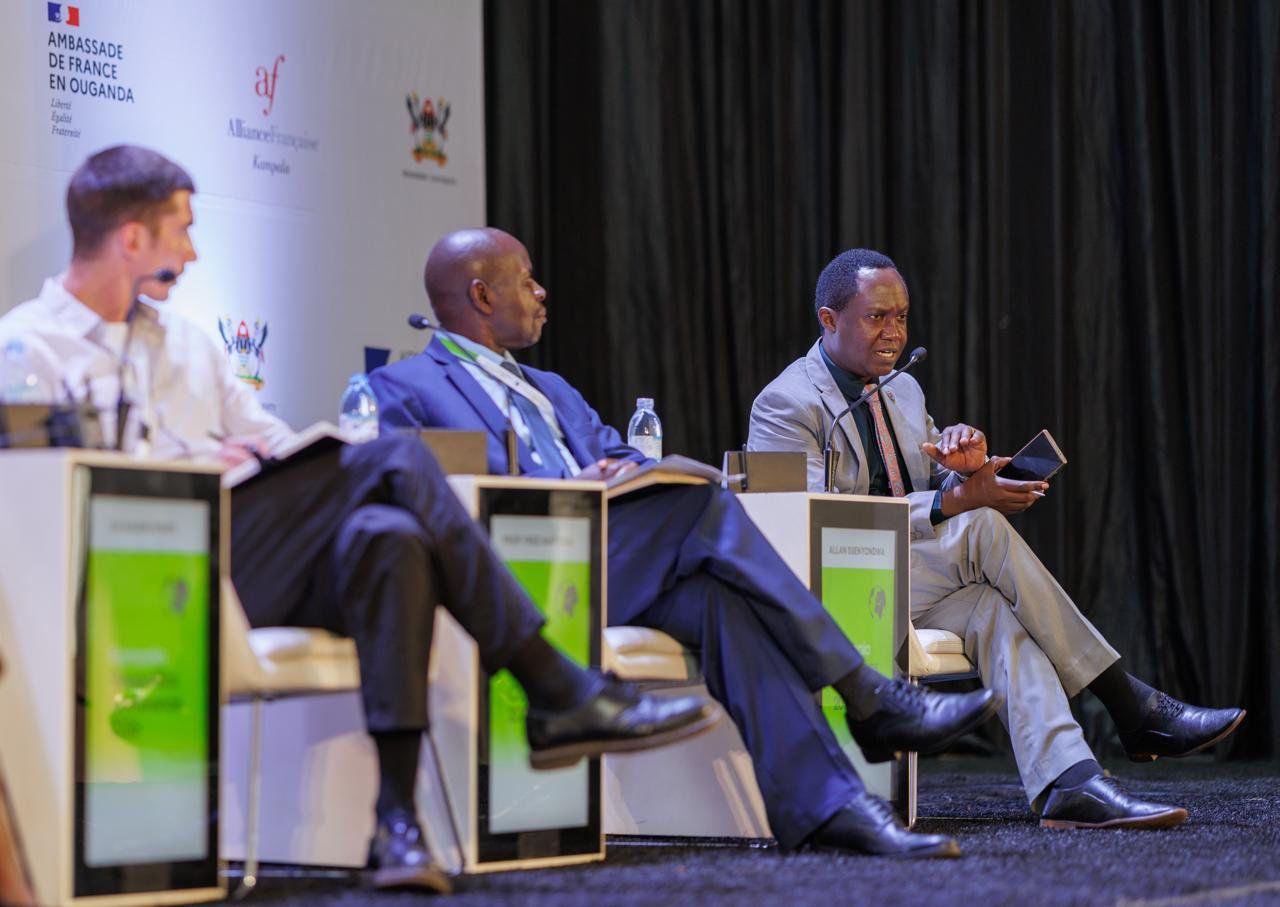
Calls for urgent reform of the global financial architecture dominated discussions at the second panel of the Kampala Geopolitics Conference 2026 in Kampala, as experts warned that Africa’s rising debt burden is increasingly constraining economic growth.
Moderated by Prof. Ibrahim Okumu, Dean of the School of Economics at Makerere University, the panel examined the role of Bretton Woods institutions and the need to redesign financing systems to reflect the realities of developing economies.
Prof. Okumu noted that Uganda currently allocates more than 30 percent of its domestic revenue to debt servicing, a situation he said reflects deep structural inequalities in global finance.
“In advanced economies, debt fuels expansion, but in many developing countries like ours, it’s about survival,” he said.
Assoc. Prof. Mindra Katoroogo called for more coordinated regional approaches to debt negotiations, arguing that African countries remain disadvantaged in global financial systems despite their resource wealth.
She said Africa is “asset-rich but negotiation-poor,” and urged regional blocs such as the East African Community to adopt collective bargaining strategies when accessing credit.
She also noted that while institutions such as the African Development Bank (AfDB), Trade and Development Bank (TDB), and East African Development Bank (EADB) provide alternatives, they are still under-capitalised relative to the continent’s financing needs.
Dr. Marin Ferry highlighted disparities in global borrowing costs, noting that Africa’s average interest rate stands at 9.8 percent compared to 7.8 percent in Latin America and 5.5 percent in Asia.
He added that private creditors, who hold about 14 percent of global debt, often complicate restructuring due to limited transparency and negotiation rigidity.
Mr. Allan Ssenyondwa pointed to Uganda’s steady industrial growth, saying the sector has expanded at an average of five percent over the past decade, supported by rising exports from an agro-based economy.
However, he stressed that sustained transformation will require deliberate investment in value addition across agriculture, steel, textiles, and cement to unlock manufacturing potential.
He estimated that regional development banks would need between USD 3 trillion and USD 5 trillion to provide affordable, long-term financing to African manufacturers.
Prof. Fred Matovu cautioned governments to distinguish between productive and unproductive debt, arguing that borrowing must be tied to measurable development outcomes.
He said debt used for infrastructure and social services can be justified, but warned that unsustainable borrowing—especially where a large share of revenue goes to interest payments—poses long-term risks.
He urged policymakers to assess borrowing based on value for money, efficiency in use of funds, and affordability of repayment terms, while also improving tax-to-GDP ratios to ease fiscal pressure.
The panel concluded that Africa’s debt challenges are not only domestic but deeply rooted in structural imbalances within the global financial system, calling for coordinated regional strategies and a reformed international financing framework to support sustainable development.
